Peptide solution vials wholesale
Short answerInternational Wholesale Peptides supplies peptide solution vials wholesale to verified institutions and trade resellers. The peptide is dissolved, sterile filtered and filled as a liquid into sealed glass vials. Fill volume, concentration, storage and shelf life are stated on the quote and the lot certificate. For research use only.
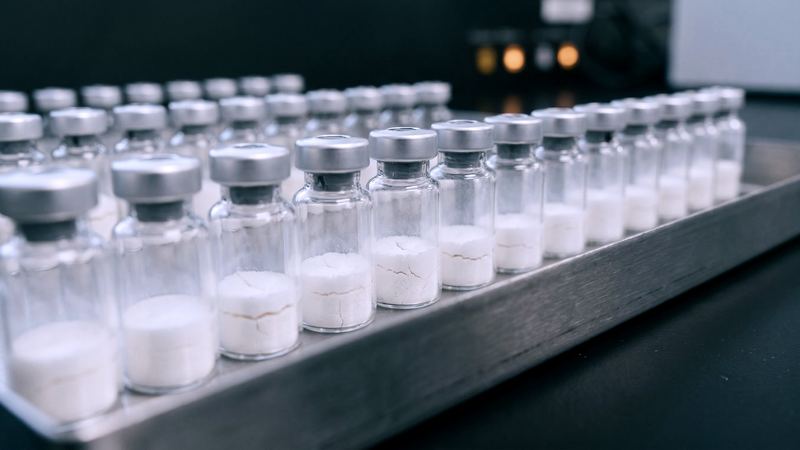
- Format
- Peptide in aqueous solution in a sealed glass vial
- Also called
- Liquid, wet or constituted vials
- Product class
- Research-grade
- Fill volume and concentration
- Stated on the quote
- Storage and shelf life
- Per certificate
- Minimum and lead time
- Stated on the quote
International Wholesale Peptides (IWP) supplies peptide solution vials wholesale to verified research institutions, laboratories and trade resellers. A solution vial holds the peptide already dissolved in liquid under a stoppered, crimped closure. The format is also called a liquid, wet or constituted vial. For research use only. Not for human or veterinary use.
What it is
A solution vial is the liquid counterpart of the lyophilized vial. The same active is used, and the freeze-drying step is left out.
- Compounding. Purified peptide is dissolved in an aqueous vehicle to a target concentration.
- Filtration. The solution passes through a 0.2 micron sterilizing-grade filter into a clean receiving vessel.
- Aseptic filling. Washed glass vials are filled by volume on an aseptic filling line. Fill weight is checked during the run.
- Closure. Each vial is stoppered, sealed with an aluminum crimp and capped.
The buyer receives a sealed vial of clear liquid with a lot number on the label. There is no cake to inspect, so the receiving check looks at clarity, color, fill level and the crimp.
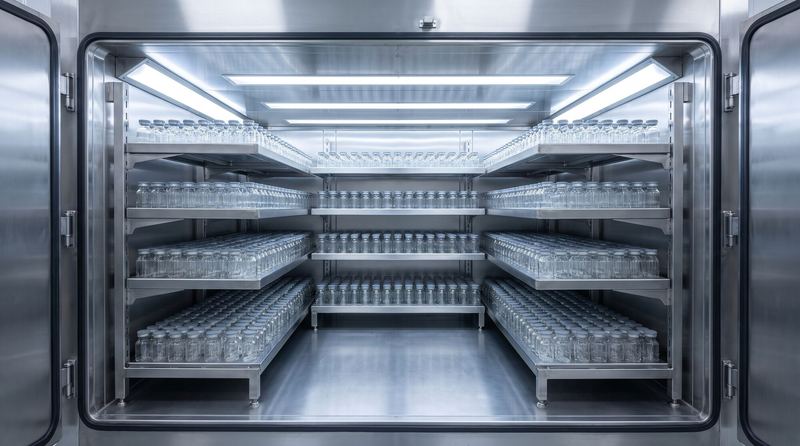
The format has one technical cost. Most peptides degrade faster in water than in the dry state, through hydrolysis, deamidation and oxidation. A solution vial therefore depends on its storage condition and has a shelf life set by data for that item. Both are stated on the certificate. The storage and cold chain guide covers receiving and excursion handling.
Peptide solution vials wholesale: specification
| Attribute | Specification |
|---|---|
| Container | Glass vial. Size and glass color are stated on the quote |
| Closure | Elastomeric stopper, aluminum crimp seal and flip-off cap |
| Contents | Peptide in aqueous solution. Vehicle stated on the quote |
| Fill volume | Stated on the quote |
| Concentration | Stated on the quote, the label and the certificate |
| Appearance | Clear liquid, unless the certificate states otherwise |
| Storage | Per certificate |
| Shelf life | Per certificate |
| Supply | Made to order. Minimum quantity and lead time are stated on the quote |
| Documents | Certificate of analysis and origin statement for the lot |
Product range
The solution format is quoted for the same actives as the lyophilized range.
| Group | Items quoted in solution vials |
|---|---|
| Single peptides | Adipotide, AOD-9604, ARA-290, BPC-157, CJC-1295 with DAC, CJC-1295 without DAC, DSIP, epitalon, FOXO4 peptide, GHK-Cu, GHRP-2, GHRP-6, gonadorelin, hexarelin, IGF-1 LR3, ipamorelin, kisspeptin-10, KPV, LL-37, melanotan-1, melanotan-2, MGF, PEG-MGF, MOTS-c, oxytocin, PE-22-28, PT-141 (bremelanotide), Selank, Semax, sermorelin, SNAP-8, SS-31, TB-500, TB-500 fragment, tesamorelin, thymalin, thymosin alpha-1 |
| Short peptide bioregulators | Cardiogen, Cartagen |
| Other compounds | 5-amino-1MQ, AICAR, L-glutathione, NAD+ |
| Two-peptide blends | CJC-1295 without DAC with ipamorelin; tesamorelin with ipamorelin; BPC-157 with TB-500; Selank with Semax |
| Three- and four-component blends | BPC-157, GHK-Cu and TB-500; the same blend with KPV; NAD+, MOTS-c and 5-amino-1MQ |
| GLP research compounds, by catalogue code | GLP-1, GLP-2, GLP-3, cagrilintide, survodutide; cagrilintide with GLP-1; GLP-1 with BPC-157; GLP-2 with BPC-157 |
| Laboratory supplies | Sterile water in vials is a separate catalogue item, quoted on request for destinations where it can be supplied |
Quantity per vial for each item is stated on the quote. GLP-1, GLP-2 and GLP-3 are catalogue names used as codes, not chemical names; the identity of each lot is stated on its certificate of analysis. Items in the GLP class, and compounds that are actives of approved prescription medicines or investigational compounds, are supplied to verified research institutions only. Their regulatory status is stated on the compound sheets and the GLP Research Compounds page. The compound index gives sequence and mass data for the main items.
Who can buy it and by what route
Solution vials are research-grade. They are sold to verified research institutions, laboratories, CROs and biotech companies, and to trade resellers that supply them. For research use only. Not for human or veterinary use.
A solution vial is an injectable presentation, so the route needs to be stated plainly. IWP does not supply this format for use in people, and no directions for use are provided. Pharmacies that compound are quoted bulk API powder, not research-grade vials.
Private label and packaging
Private-label solution vials are available to approved trade accounts. The minimum is stated on the quote, typically 50 kits (500 units) per item. The buyer supplies artwork to our label template, and the label carries the lot number and the research-use statement in full. Flip-off cap color and carton options are stated on the quote. Private label takes 4 to 6 weeks from approved artwork. The private label page describes artwork review and reserved lots.
Label stock and adhesive are chosen for the storage condition on the certificate, because condensation lifts a standard paper label.
Ordering
Ordering follows the same path for every buyer: apply for an account, business verification, quote, order. There are no public prices. A first order of made-to-order product starts from US$10,000, prepaid by bank wire or ACH. Stock-list items can be bought once per account as an evaluation order from US$2,500. Solution vials are made to order, so the minimum quantity and the lead time for each item are stated on the quote. The wholesale terms set out the four order-value price bands, payment and claims.
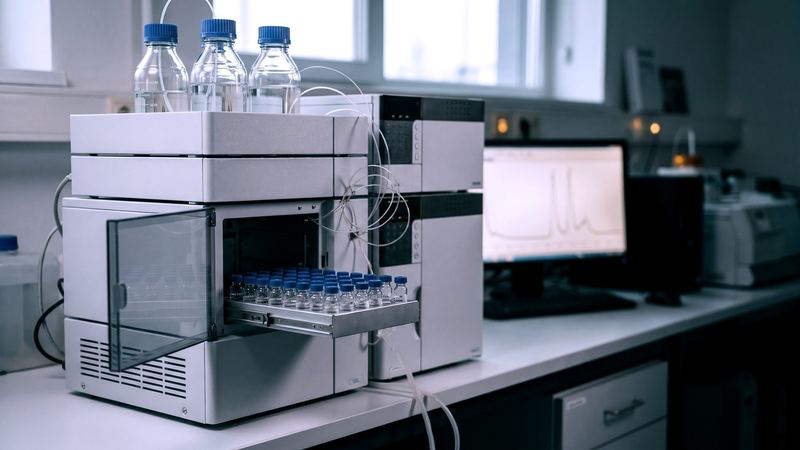
Each lot ships with a certificate of analysis that names the testing laboratory, and any lot number can be checked against its certificate on the site.
Frequently asked questions
What is the difference between a solution vial and a lyophilized vial?
A lyophilized vial holds a freeze-dried solid. A solution vial holds the same active already dissolved in liquid, with no drying step. The solution format removes a preparation step for the laboratory, but most peptides are less stable in water, so the storage condition and shelf life on the certificate matter more.
What concentration and fill volume are available?
Concentration and fill volume are set per item and are stated on the quote, then repeated on the label and the certificate of analysis. We do not publish a standard list, because the workable concentration depends on the solubility and stability of each peptide in its vehicle.
How should solution vials be stored?
Store them to the condition printed on the certificate for that lot. Shelf life is stated per certificate and applies to unopened vials held in that condition. Record storage temperatures on receipt and in storage, since an unrecorded excursion cannot be assessed later.
Are peptide solution vials sterile?
The solution passes through a sterilizing-grade filter and is filled on an aseptic line. Sterility and bacterial endotoxin results appear on the certificate where they were tested for that lot. If the certificate has no sterility line, do not assume the lot is sterile.
Who can order peptide solution vials?
Verified research institutions, laboratories, CROs, biotech companies and trade resellers that supply them. The vials are research-grade and are not for human or veterinary use. We do not sell to individuals, and every account passes business verification before a quote is issued.
Related pages
Lyophilized peptide vials wholesaleInternational Wholesale Peptides sells lyophilized peptide vials wholesale to verified trade buyers in kits of 10 vials. Each lot carries a certificate of analysis…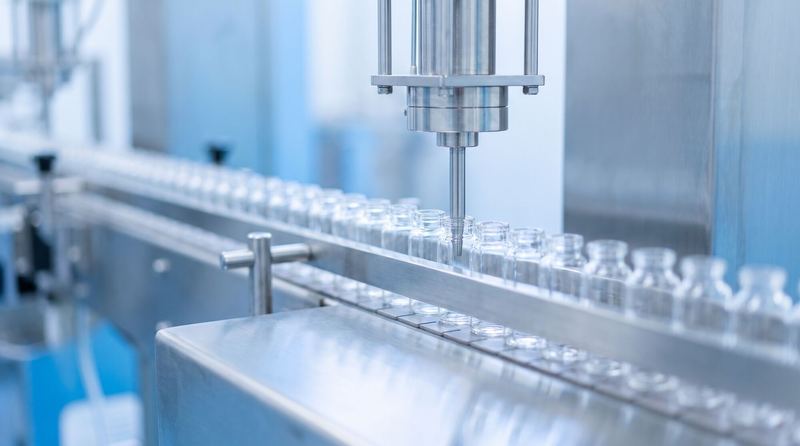 Prefilled peptide pens wholesaleInternational Wholesale Peptides supplies prefilled peptide pens wholesale as research-grade material to verified institutions and trade resellers. A 3 mL glass cartridge of peptide…
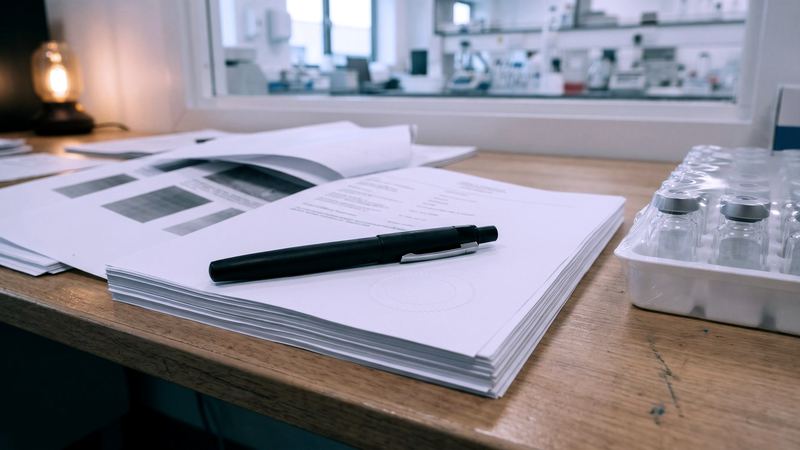 Peptide certificate of analysis: what ours shows and how to verify itA peptide certificate of analysis should name the product, lot number, manufacturing origin and testing laboratory, and report identity by mass spectrometry, purity by…
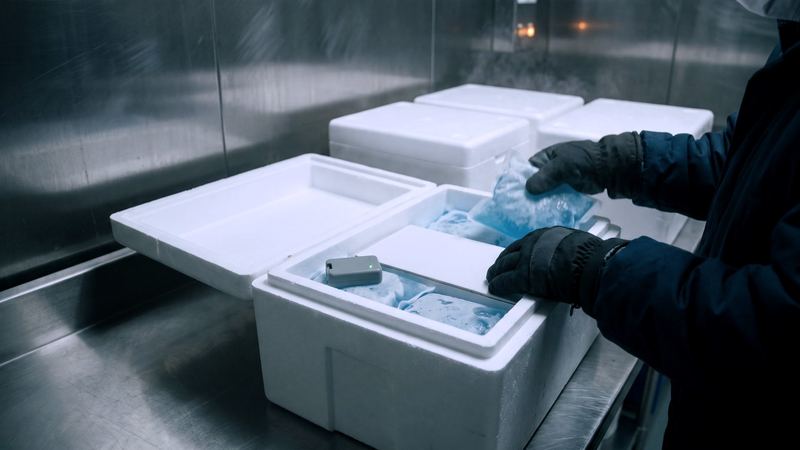 Peptide storage and shipping: cold chain for warehouse stockLyophilized peptide stock is stored sealed, dry, dark and cold, at the temperature on the label, commonly frozen for long-term holding or refrigerated for…