Peptide certificate of analysis: what ours shows and how to verify it
Short answerA peptide certificate of analysis should name the product, lot number, manufacturing origin and testing laboratory, and report identity by mass spectrometry, purity by HPLC and peptide content with methods and limits. International Wholesale Peptides issues one per lot and lets buyers check it by lot number.

- Issued
- One certificate per lot
- Laboratory
- Named on the certificate
- Core tests
- Identity (MS), purity (HPLC), peptide content
- Conditional tests
- Endotoxin and sterility, where relevant
- Endotoxin result
- A number against a stated limit, not pass or fail
- On request
- Heavy metals, raw-material certificate, QR code, certificate in the buyer's name
A certificate, field by field.
This example shows the layout. The sections below explain each field and how to verify it.
- Line
- USA-Synthesized
- Release date
- 12 Nov 2026
- Synthesis site
- Named in the lot file
- Testing laboratory
- Named on the certificate
| Test | Method | Result |
|---|---|---|
| Identity | Mass spectrometry | Conforms |
| Purity | RP-HPLC | 99.1% |
| Peptide content | Amino acid analysis | 84.2% |
| Endotoxin | USP <85> | Within limit |
| Sterility | USP <71> | No growth |
A peptide certificate of analysis is the record of what one lot is and how it tested. International Wholesale Peptides (IWP) issues one certificate per lot, names the testing laboratory on it, and makes it checkable by lot number. This page lists every field on our certificate, shows how to verify it, and sets out the red flags to look for on a certificate from any supplier.
What our peptide certificate of analysis shows
The certificate has three blocks: what the lot is, how it tested, and who stands behind the results.
| Field | What it shows | Why a buyer checks it |
|---|---|---|
| Product name | The compound name used in our catalogue | Must match the label and the order |
| Sequence or structure | Amino acid sequence, with terminal modifications such as acetylation or amidation | Confirms which variant was made |
| CAS number | Where one is assigned to the compound | Removes naming ambiguity |
| Molecular formula and theoretical mass | Calculated values for the free peptide | The reference for the identity test |
| Salt form | The counter-ion, for example acetate or trifluoroacetate | Affects peptide content and assay suitability |
| Lot number | The unique lot reference | Must match the vial label, kit and packing list |
| Origin statement | USA-Synthesized, US-Finished or Standard, and where the lot was made | Origin is stated per lot |
| Format and fill | Lyophilized vial or bulk powder, and the quantity per unit | States whether quantity is gross powder or net peptide |
| Appearance | Description of the cake or powder | A first check on receipt |
| Identity | Mass spectrometry: observed mass against theoretical mass | Confirms the main component |
| Purity | Reversed-phase HPLC: main peak area percent, with the limit | Shows the level of peptide-related impurities |
| Peptide content | Result and the method used | Converts powder weight to peptide weight |
| Bacterial endotoxin | LAL result as a number, with the limit printed beside it, where relevant | A number can be compared between lots. Pass or fail cannot |
| Sterility | USP <71> result, where relevant | States whether sampled units showed growth |
| Heavy metals | Result and limit, where the test was requested for the item | Run on request. Whether it applies is stated on the quote |
| Storage condition | Temperature and protection from light or moisture | Sets receiving and warehouse handling |
| Retest or expiry date | The date assigned to the lot | Shelf life is stated per certificate |
| Testing laboratory | Name of the laboratory that produced each result | Lets the buyer check the laboratory |
| Report number | The laboratory's own reference for the report | The number to quote when confirming a result with the laboratory |
| Test and issue dates | When testing was done and when the certificate was issued | Results should predate release |
| Authorization | Name and role of the person who released the certificate | Shows accountability for the document |
Endotoxin and sterility lines appear only where those tests were run. An absent line means the test was not performed for that lot.
Certificate detail buyers ask for
| Question | Position |
|---|---|
| Is there a QR code on the label? | A QR code that opens the lot record on the lookup page can be printed on the unit label or the certificate on request. Availability is stated on the quote |
| Is the endotoxin limit stated? | Yes, where the test is run. The certificate prints the result as a number and the limit beside it, in endotoxin units |
| Are heavy metals tested? | On request. Whether the test is run for an item is stated on the quote, and the result is printed on the certificate when it is run |
| Can I see the raw-material certificate? | Yes, on request. The supplier certificate for the incoming active can be sent for the lot, to be read beside the certificate for the finished lot |
| Can a result be confirmed with the laboratory? | Yes. Contact the laboratory named on the certificate and quote the report number |
| Can the certificate carry my company name? | Yes, on request for private-label orders. Any charge is stated on the quote |
| Can more assays be added? | Yes, on request. Each added assay is priced on the quote |
Purity and peptide content are different numbers. Purity says how much of the peptide present is the right peptide. Content says how much peptide is in the vial. A lot can pass one and fail the other, so check both against the label quantity.
How to read the three core results
Identity by mass spectrometry
The certificate gives the theoretical mass and the observed mass. For electrospray data, the observed value is usually deconvoluted from several charge states. The two should agree within the tolerance of the instrument. A result that only says "conforms" with no observed value gives a buyer nothing to check.
Purity by HPLC
The purity line is a peak area percentage from a reversed-phase method. It depends on the column, the gradient, the wavelength and how the baseline was integrated. A shallow gradient resolves more impurities than a steep one, so the same lot can read differently under two methods. The method conditions and the chromatogram should be available for the lot. The HPLC purity guide explains how to read a trace.
Peptide content
Peptide content, also called net peptide content, is the mass fraction of peptide in the powder. Counter-ions and water make up most of the balance. A peptide with several basic residues carries more counter-ion and so tends to show lower content. Acetate has a lower mass than trifluoroacetate, so an acetate salt of the same peptide usually reads higher. Use this figure, not the purity figure, when calculating a concentration from a weighed amount.
How to verify a certificate of analysis
- Match the lot number. The number on the vial label, the kit and the packing list must be the number on the certificate.
- Run the lot number through lot lookup. The lookup returns the certificate on file for that lot. Compare it with the copy in hand, line by line.
- Check the laboratory. Confirm that the named laboratory exists. Where it is accredited to ISO/IEC 17025, check that the scope on the accreditation body's public register covers the methods reported. To confirm a result, contact the laboratory through its own website and quote the report number printed on the certificate.
- Check the arithmetic. The observed mass should agree with the theoretical mass for the stated sequence and modifications. The fill quantity, purity and peptide content should be consistent with each other.
- Check the dates. Testing should come after manufacture and before issue. The retest or expiry date should fit the storage condition stated.
- Check the origin statement. The certificate states which of the three origin statements applies. For USA-Synthesized lots, it should agree with the lot origin file described on the USA-Synthesized page. For US-Finished lots, the source country of the active should be disclosed.
- Test on receipt where your own procedures require it. Pharmacies and manufacturers normally run at least an identity test on incoming material under their own quality system.
Red flags on any supplier's certificate
These checks apply to any peptide certificate, from any source.
| Red flag | Why it matters |
|---|---|
| No lot number, or a lot number that does not match the label | The document cannot be tied to the goods |
| No named testing laboratory | The results cannot be traced or confirmed |
| Results with no method or acceptance limit | A number without a method cannot be interpreted |
| Identity reported only as "conforms" | No observed mass is given to check against theory |
| Purity stated with no chromatogram available on request | The figure cannot be examined for integration choices |
| No peptide content and no salt form | Powder weight cannot be converted to peptide weight |
| Identical results across several lots | Real lots vary. Repeated figures suggest a copied template |
| Test dates after the shipping date, or no dates | The lot was released before results existed |
| A laboratory report number the laboratory cannot confirm | The report may not be genuine |
| Fonts, alignment or metadata that show editing after issue | The document may have been altered |
| Sterility or endotoxin implied in sales copy but absent from the certificate | Only what is reported has been tested |
| Origin claims on the website that the certificate does not repeat | Origin should be stated on the lot document itself |
One red flag is a reason to ask a question. Several together are a reason to stop. The guide to reading a peptide COA works through sample documents, and the supplier qualification guide places the certificate inside a wider supplier review.
Where the certificate fits in our quality system
The certificate is one part of the lot record. Our quality page describes the tests, the documents that ship with a lot, how to report a lot issue, and how lot holds and recalls work. Verified trade buyers can ask for sample certificates for specific items when they apply for an account.
Frequently asked questions
What should a peptide certificate of analysis show?
At minimum: product name and sequence or CAS number, lot number, manufacturing origin, salt form, test methods, acceptance limits, results, test dates and the laboratory that ran the tests. For a synthetic peptide the core tests are identity by mass spectrometry, purity by HPLC and peptide content.
How do I verify a certificate of analysis from International Wholesale Peptides?
Match the lot number on the vial label to the certificate. Enter that lot number into the lot lookup on this site and compare the certificate it returns with the copy in hand. Then check the named laboratory independently and, if needed, ask it to confirm the report.
Does a certificate with 99% purity mean the vial holds 99% peptide?
No. The purity figure comes from HPLC and covers peptide-related material only. Counter-ions and residual water are not counted. The peptide content line gives the fraction of the powder that is peptide. Read both lines together, and check whether the labeled quantity is gross powder or net peptide.
Why does the counter-ion matter on a certificate?
Synthetic peptides are isolated as salts, usually trifluoroacetate or acetate. The counter-ion adds mass, so it lowers peptide content, and some assay systems are sensitive to trifluoroacetate. A certificate that states the salt form lets a laboratory correct concentrations and choose a suitable lot.
What are the most common red flags on a peptide certificate?
No lot number or a lot number that does not match the label, no named laboratory, results with no method or limit, a purity figure with no chromatogram available, a mass result that only says 'conforms', identical results across different lots, and a document that has been edited after issue.
Can the certificate be issued in my company name?
Yes, on request for private-label orders. The certificate keeps the lot number, the results and the name of the testing laboratory, and adds the brand's company name. Any charge is stated on the quote. Additional assays can be added to a lot on request and are priced on the quote.
How do I confirm a result with the testing laboratory?
Find the laboratory named on the certificate through its own website or its accreditation record, not through contact details printed only on the document. Quote the report number and the lot number and ask the laboratory to confirm that it issued the report and that the results match.
Is a certificate of analysis proof of sterility?
Only if sterility was tested and reported for that lot, and even then the result describes the units sampled. Sterility assurance for a whole lot comes from the manufacturing process. If the certificate has no sterility line, the lot should not be assumed sterile.
Related pages
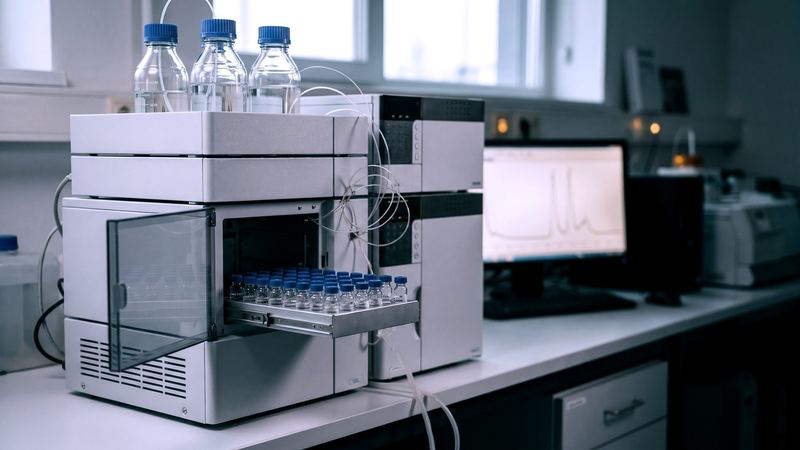 Peptide quality testing and documentationEvery International Wholesale Peptides lot ships with a certificate of analysis that names the testing laboratory and reports identity by mass spectrometry, purity by…
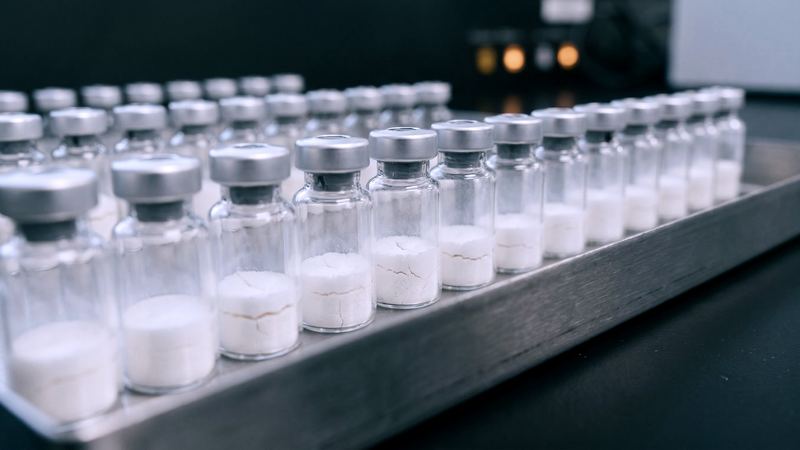 Verify peptide lot number and certificateTo verify a peptide lot number from International Wholesale Peptides, enter the number printed on the vial label or packing list into the lot…How to read a peptide COATo read a peptide COA, match the lot number to the label, confirm identity by comparing observed and theoretical mass, read HPLC purity as…Peptide HPLC purity explainedPeptide HPLC purity is the area of the target peptide peak divided by the total area of all integrated peaks in a reversed-phase chromatogram,…