Peptide supplier for government tenders and public procurement
Short answerInternational Wholesale Peptides acts as a peptide supplier for government tenders by quoting ministries, public laboratories and registered local bidders. It provides a certificate of analysis and origin statement per lot for the bid file. It supplies only the product class the tender specifies, by a route confirmed in writing.

- Buyers
- Ministries, public laboratories, defense research bodies, registered tender bidders
- Usual structure
- A licensed local importer or agent bids; IWP supplies it
- Bid file documents
- Certificate of analysis, origin statement, specification, quote
- Product class
- As specified in the tender; no substitution between classes
- End-use screening
- Applied to every public and defense request
- Countries served
- Worldwide; every country assessed on request
International Wholesale Peptides (IWP) acts as a peptide supplier for government tenders by quoting public buyers and the registered local companies that bid to them. Each quote covers the product class the tender specifies and comes with the lot-level documents a bid file needs. We supply only where a lawful route exists, confirmed in writing before any order.
Who this page is for
This page is for procurement officers at ministries of health, science and agriculture, public and university laboratories funded through public procurement, defense and security research establishments, and central medical stores. It is also for the importers, wholesalers and agents that prepare bids and need a manufacturer-side supplier that answers tender questions in writing.
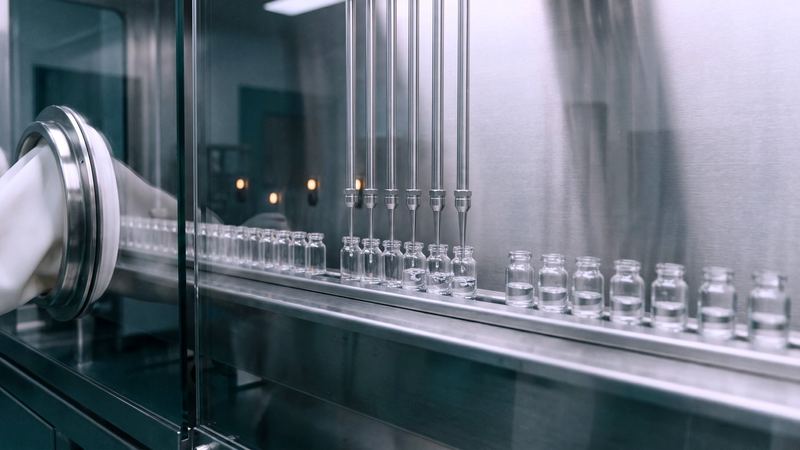
What public buyers can buy
| Product class | Typical pack | Documents | Typical public buyer and route |
|---|---|---|---|
| Research-grade lyophilized vials | Kits of 10 vials | Certificate of analysis per lot, specification, origin statement | Public research institutes and reference laboratories, as verified institutions. Not for human or veterinary use |
| Bulk API powder | Sealed containers | Certificate of analysis with identity, purity, peptide content, and endotoxin where relevant; origin statement | Public hospital pharmacies and state manufacturers, through the licensed pharmacy or a licensed importer |
| Cosmetic peptide actives | Sealed containers of powder | Certificate of analysis, INCI name, peptide content | Public formulation laboratories and state-owned manufacturers |
| Finished authorized medicines | Not applicable | Not applicable | Not sold by us |
The product class in the tender decides what can be offered. We do not offer one class against a specification written for another.
The lawful route for a public buyer
This is a general summary as of November 2026. Procurement law and medicines law both apply, and they differ in every country.
The bidder is usually local. Public procurement rules commonly require a bidder that is registered in the country, tax compliant and, for health products, licensed as an importer or wholesaler. That company holds the contract with the authority, imports as importer of record and delivers. We supply that company. Requirements for it are on the distributors page.
Medicines tenders need authorized medicines. A tender for a medicine normally requires a marketing authorization or a specific import authorization in the buyer's country. We do not hold product registrations to offer against such tenders and do not quote for them.
Research and laboratory tenders. Public laboratories buy reagents and research materials under simpler rules. The laboratory applies as an institution, as set out on the page for research institutions.
Hospital pharmacy tenders. Where a public hospital pharmacy buys starting materials, the route is the one on the page for hospitals and health systems.
We supply worldwide wherever a lawful route exists for the product and the buyer. Every country is assessed on request, and where a market restricts a product class the route is assessed case by case and confirmed in writing.
How government tenders work for a peptide supplier
Tender purchasing has fixed stages and fixed dates. A supplier that learns of a tender a week before closing can rarely help the bidder.
| Stage | Who acts | What we do |
|---|---|---|
| Market sounding or request for information | Procurement officer or end user | Answer specification questions in writing, including what we cannot supply |
| Tender published | Contracting authority | Review the specification with the bidder and state any deviations |
| Clarification period | Bidder | Supply answers for the bidder to submit by the deadline |
| Bid preparation | Bidder | Provide the quote, specification, sample certificate of analysis, origin statement and supply letter |
| Evaluation | Tender committee, technical evaluators | Respond to technical queries through the bidder |
| Award and contract | Authority and bidder | Confirm the route in writing and agree a delivery schedule with the bidder |
| Delivery and acceptance | Receiving stores or laboratory | Ship lots with certificates matching the lot numbers delivered |
What tender documents usually ask for
| Tender requirement | How it is handled |
|---|---|
| Technical specification compliance | Line-by-line statement against our specification, with deviations marked |
| Certificate of analysis | A recent lot's certificate with the bid; the delivered lot's certificate with the goods |
| Country of origin | Stated per lot. See the page on US-synthesized peptides for how origin is documented |
| Manufacturer's authorization for the bidder | A supply letter naming the tender and the bidder, where the bidder is a verified account |
| Remaining shelf life at delivery | Stated on the quote for the lot offered. Tenders often set a minimum |
| Legalized or apostilled documents | Arranged where the tender requires it. Allow time before the closing date |
| Bid security, performance bond, penalties | Carried by the bidder under its contract with the authority |
| Registration on a government supplier portal | Held by the bidder. Raise any requirement for the manufacturer at clarification stage |
Evaluators often score on documents before price. The certificate of analysis page explains what each of ours reports, and delivered lots can be checked on the lot lookup by the receiving officer.
Defense, security and public health laboratories
These buyers purchase research-grade material for laboratory research. We treat them as institutions with additional screening. We ask who the end user is, where the laboratory is and what kind of research is planned in general terms. We screen the parties against applicable sanctions and export control lists and decline where the end use or end user cannot be established. A classified program can name a procurement office as the contracting party, but we still need enough information to complete screening.
Order pattern and terms
Public buyers order in large, infrequent lots tied to a budget year, with delivery in tranches. A framework contract may run for one to three years with call-off orders. That pattern fits a supply program, meaning a forward schedule with reserved capacity and reserved lots, which is open to accounts ordering in the top band of US$30,000 and over. Smaller laboratory tenders can start with the one-time evaluation order of stock-list items from US$2,500, or a first made-to-order order from US$10,000.
Every order is prepaid by bank wire or ACH. Public bodies commonly pay their contractor after acceptance, so the bidder finances the gap. Stock-list items leave in 2 to 5 business days and most product is made to order in about 3 weeks; permits, legalization and transit are additional. The guide to importing peptides covers the import steps.
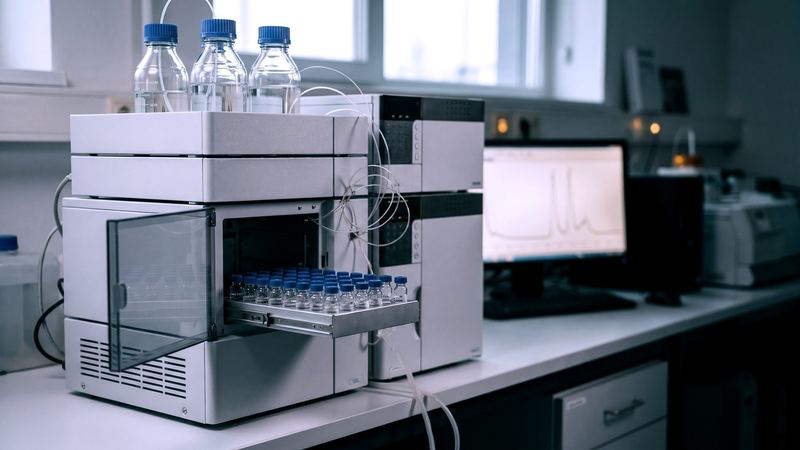
What we need at application
| Item | Why we ask |
|---|---|
| Tender reference, contracting authority and closing date | To decide whether we can respond in time |
| The tender specification and required document list | To state compliance and deviations in writing |
| Bidder's legal entity, registration and licenses | To verify the business and confirm the route |
| End user and delivery point | To match the product class to the buyer and complete screening |
| Quantities, delivery tranches and shelf-life requirement | To quote lots and a schedule |
| Origin rules and any document legalization required | To prepare the correct statements and allow time |
| For direct public buyers: the procurement rule that permits a direct purchase | To quote in a form the buyer can accept |
Bidders and public laboratories apply through the application page. Questions before a tender is published can go through the contact page. All buyer types are on the buyers hub.
Frequently asked questions
Does IWP bid for government tenders directly?
Usually not. Most public tenders require a bidder registered in the country, often with a local establishment license. A licensed local importer or wholesaler bids and we supply it, with a supply letter for the named tender where the bidder qualifies. Direct quotes to public laboratories are possible where procurement rules allow.
What documents can IWP provide for a tender file?
A quote for the named tender, the product specification, a certificate of analysis for a recent lot naming the testing laboratory, and an origin statement. If a tender requires a document we do not hold for that item, such as a specific registration or certificate, we say so before the bid.
Can research-grade peptides be offered against a tender for medicines?
No. A tender for medicines calls for products authorized in that country. Research-grade product is for laboratory research by verified institutions; not for human or veterinary use. We quote research-grade peptides only against tenders for laboratory reagents and research materials.
How does IWP handle defense and security research buyers?
As research institutions, with added screening. We ask for the end user, the laboratory and the research purpose in general terms, and we screen parties against applicable sanctions and export control lists. We decline any request where the end use or end user cannot be established.
Can IWP meet tender terms such as bid bonds, deferred payment periods and penalties?
Those terms are normally carried by the local bidder that contracts with the authority. Our terms with the bidder are stated on the quote. Every order is prepaid by bank wire or ACH, so the bidder should price its own financing into the bid.
Which origin is stated when a tender has origin rules?
The origin of the specific lot. A USA-Synthesized lot names the synthesis site and the fill-and-finish site. A US-Finished lot discloses the source country of the active and is filled, finished and tested in the United States. A Standard lot is made and finished outside the United States. Whether a lot meets a tender's origin rule is for the bidder to determine.
Related pages
 Peptide distributor supplyA peptide distributor buys from International Wholesale Peptides on a trade account. Price is set by order value in four bands. A distributor registers…
 Research peptide supplier for laboratories and institutionsInternational Wholesale Peptides is a research peptide supplier for laboratories at verified institutions. Research-grade peptides ship as lyophilized vials in kits of 10, each…
 Importing peptides: classification, licensed importers and customsImporting peptides lawfully depends on how the destination country classifies the product: medicine, active ingredient, cosmetic ingredient or laboratory chemical. Classification follows presentation and…
 US-synthesized peptides: the USA-Synthesized LineInternational Wholesale Peptides supplies a USA-Synthesized Line to verified trade buyers. The active ingredient is synthesized in the United States, and each lot file…