Peptide supplier for hospitals and health systems
Short answerInternational Wholesale Peptides is a peptide supplier for hospitals through the licensed hospital pharmacy, which can buy bulk API for compounding under its license. IWP does not sell finished medicines, and wards, outpatient clinics and individual physicians are not supplied for patient use.
- Hospital pharmacy
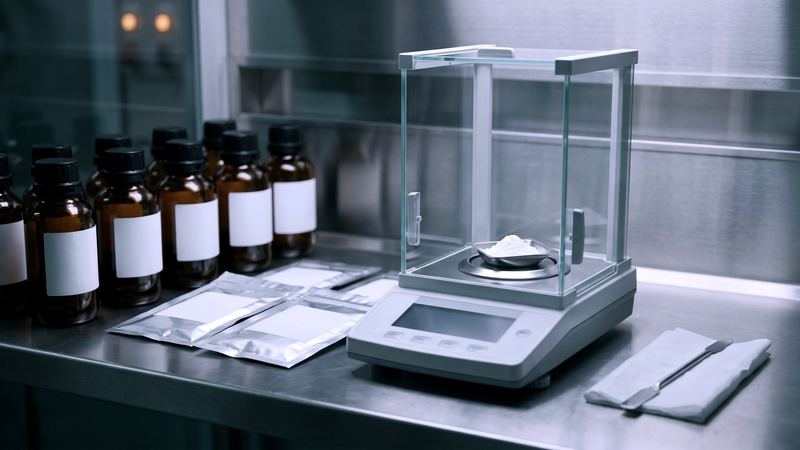
- Bulk API powder, bought by the licensed pharmacy
- Finished medicines
- Not sold by IWP
- Wards, clinics and departments
- No direct supply for patient use
- Per-lot documents
- Certificate of analysis naming the testing laboratory, origin statement
- What decides the route
- The product class, not the buyer's wish
International Wholesale Peptides (IWP) is a peptide supplier for hospitals through one door: the licensed hospital pharmacy, which can buy bulk API for compounding under its license. We do not sell finished medicines. Wards, outpatient clinics and individual physicians are not supplied for patient use.
Who this page is for
This page is for directors of pharmacy, compounding supervisors, and procurement and supply chain managers in hospitals, academic medical centers and health systems. It also answers physicians who have been told to "go through purchasing" and want to know what purchasing will say.
What a hospital can buy
| Product class | Typical pack | Documents | Route |
|---|---|---|---|
| Bulk API powder | Sealed containers | Certificate of analysis with identity, purity, peptide content, and endotoxin where relevant; origin statement | Sold to the licensed hospital pharmacy |
| Finished approved medicines | Not applicable | Not applicable | Not sold by us. Bought from the authorization holder or a licensed wholesaler |
| Patient-use compounded product | Prepared by the hospital pharmacy or an outsourcing facility | The pharmacy's records | Not sold by us |
| Cosmetic skincare | Jars and bottles | Certificate of analysis for the active, ingredient list | Direct, for hospital retail outlets, as a cosmetic |
The product class, not the buyer's wish, decides the route. A department cannot change the route by changing the cost center.
The lawful route for a hospital
This summary is as of November 2026 and is not legal advice.
Patient-use product stays inside the pharmacy. In the United States, a hospital pharmacy compounds under its state license and the conditions of section 503A, or buys compounded product from a registered 503B outsourcing facility. Whether a particular peptide may be compounded is unsettled for several substances, and the director of pharmacy must confirm the position. In other countries, hospital pharmacies prepare medicines under national pharmacy law and obtain starting materials from licensed importers or wholesale dealers where the law requires. We supply the licensed party and confirm the route in writing. This is the same model set out on the clinics page.
Human studies are a separate system. Investigational product is manufactured and released for a specific study, under the sponsor, the ethics committee or institutional review board, and the national regulator. We do not supply it.
We supply worldwide wherever a lawful route exists for the product and the buyer. Every country is assessed on request, and where a market restricts a product class the route is assessed case by case and confirmed in writing.
How hospitals qualify a peptide supplier
Hospital purchasing is slower and more documented than any clinic's, and the steps are consistent across systems.
| Step | Owner | What we are asked for |
|---|---|---|
| Clinical need is raised | Requesting physician | Nothing yet |
| Formulary review, for anything used in patients | Pharmacy and therapeutics committee | Not a supplier decision. The committee decides whether the hospital offers the therapy |
| Supplier qualification | Director of pharmacy or compounding supervisor | Manufacturer and site, certificates, test methods, origin, supplier questionnaire |
| Vendor onboarding | Procurement or supply chain | Legal entity, tax and banking details, insurance evidence, terms |
| Purchase order | Buyer in pharmacy purchasing | Quote reference, lot and pack details |
| Receipt | Pharmacy receiving | Certificate matching the lot received, storage condition, temperature record where used |
Two points save time. First, the pharmacy and therapeutics committee decision comes before supplier selection, and no supplier can shorten it. Second, the pharmacy qualifies the API manufacturer, not only the seller, so the lot file has to name the synthesis site. Ours does. The API supplier checklist follows the same order as most hospital questionnaires.
Standards a hospital pharmacy works to
In the United States, hospital compounding is assessed against USP General Chapters <795> for nonsterile preparations, <797> for sterile preparations and <800> for hazardous drugs, by the state board of pharmacy and by the hospital's accreditor. Those chapters expect components from qualified sources with a certificate of analysis. In Europe, hospital pharmacy preparation commonly follows national rules and the PIC/S guide to good practices for the preparation of medicinal products in healthcare establishments. We report identity, purity and peptide content on every lot, and endotoxin and sterility where relevant. The guide to endotoxin and sterility testing explains what those results cover.
Accounts, terms and order pattern
A hospital pharmacy opens a trade account. Price is set by order value in four bands: under US$10,000; US$10,000 to US$20,000; US$20,000 to US$30,000; and US$30,000 and over, which carries the lowest price. Per-item volume breaks apply at 50, 150, 300 and 500 kits, and a reached level is kept on later orders of that item. Every order is prepaid by bank wire or ACH, which some public hospitals cannot do without an exception from finance; raise this early. Stock-list items leave in 2 to 5 business days, and most product is made to order in about 3 weeks, with a first made-to-order order from US$10,000. A health system that wants one qualified lot held for several sites, or a forward supply schedule, is describing a supply program, which is open to accounts ordering in the top band of US$30,000 and over. Requirements for pharmacy accounts are on the page for compounding pharmacies.
Hospital pharmacies reorder API on consumption and prefer to stay on one lot for as long as it lasts. Each certificate of analysis can be checked by lot number on this site.

What we need at application
| Item | Why we ask |
|---|---|
| Hospital legal entity, registration number and address | To verify the institution |
| Pharmacy license and the name of the director of pharmacy or pharmacist in charge | To supply API to the licensed premises |
| Product classes and items wanted, by department | To state the route for each class |
| The hospital's vendor onboarding forms and any supplier questionnaire | To complete them once, before the first order |
| Purchasing route: direct, group contract, framework or tender | To quote in the form the hospital can accept |
Apply through the application page. Public hospitals that buy by tender should also read the page for government and tender buyers. Other buyer types are on the buyers hub.
Research-grade product
Research-grade product is supplied to verified research institutions; see the page for research institutions.
Frequently asked questions
Can a hospital buy peptides directly from IWP?
The licensed hospital pharmacy can. It buys bulk API powder for compounding under its license, and a hospital's retail outlets can buy cosmetic skincare as a cosmetic. Wards, outpatient clinics and individual physicians cannot buy for patient use. We confirm the route in writing before any order.
Does IWP sell finished, approved peptide medicines to hospitals?
No. We do not sell finished prescription medicines. A hospital buys approved medicines from the marketing authorization holder or a licensed pharmaceutical wholesaler. For hospitals we supply bulk API to the licensed pharmacy and cosmetic goods to retail outlets.
Does IWP hold group purchasing or framework contracts?
We do not state contract memberships on this site. A hospital that buys through a group purchasing organization or a national framework should raise it at quote stage. API purchases are often made outside those contracts as non-catalog or direct purchases, under the hospital's own policy.
What will a hospital pharmacy ask for before approving IWP as a supplier?
Typically a supplier questionnaire, the manufacturer and site for each API, a certificate of analysis naming the testing laboratory, endotoxin and sterility data where relevant, and the origin statement. We state in writing, per item and origin statement, which documents exist before the pharmacy places an order.
Can a public hospital order by purchase order with payment after delivery?
Every order is prepaid by bank wire or ACH, and a purchase order can accompany the payment for the hospital's records. Public hospitals that can only buy through a tender or a registered local vendor should read the page for government and tender buyers.
Related pages
Peptide API supplier for compounding pharmaciesInternational Wholesale Peptides is a peptide API supplier for compounding pharmacies that hold a current license. It sells bulk API powder only, with a… Research peptide supplier for laboratories and institutionsInternational Wholesale Peptides is a research peptide supplier for laboratories at verified institutions. Research-grade peptides ship as lyophilized vials in kits of 10, each…
 Wholesale peptides for clinics: how the lawful route worksA clinic can apply to International Wholesale Peptides today. It can buy cosmetic, hair, scalp and other non-medicine goods direct, have its licensed pharmacy…
 Peptide API supplier checklist for pharmacies and manufacturersA peptide API supplier should provide the original manufacturer's identity and FDA establishment registration, evidence of cGMP manufacture under ICH Q7, a lot-specific certificate…